My 20 Years
It’s been exactly 20 years since I started middle school in 1994. Our group chat has been buzzing lately. The recent trend is each person writing a piece about their past. Rare opportunity to reminisce, so here’s a account from middle school to now.
Middle School (1994-1997)
Those years of shared life — you know how it is. Skipping details.
High School (1997-2000)
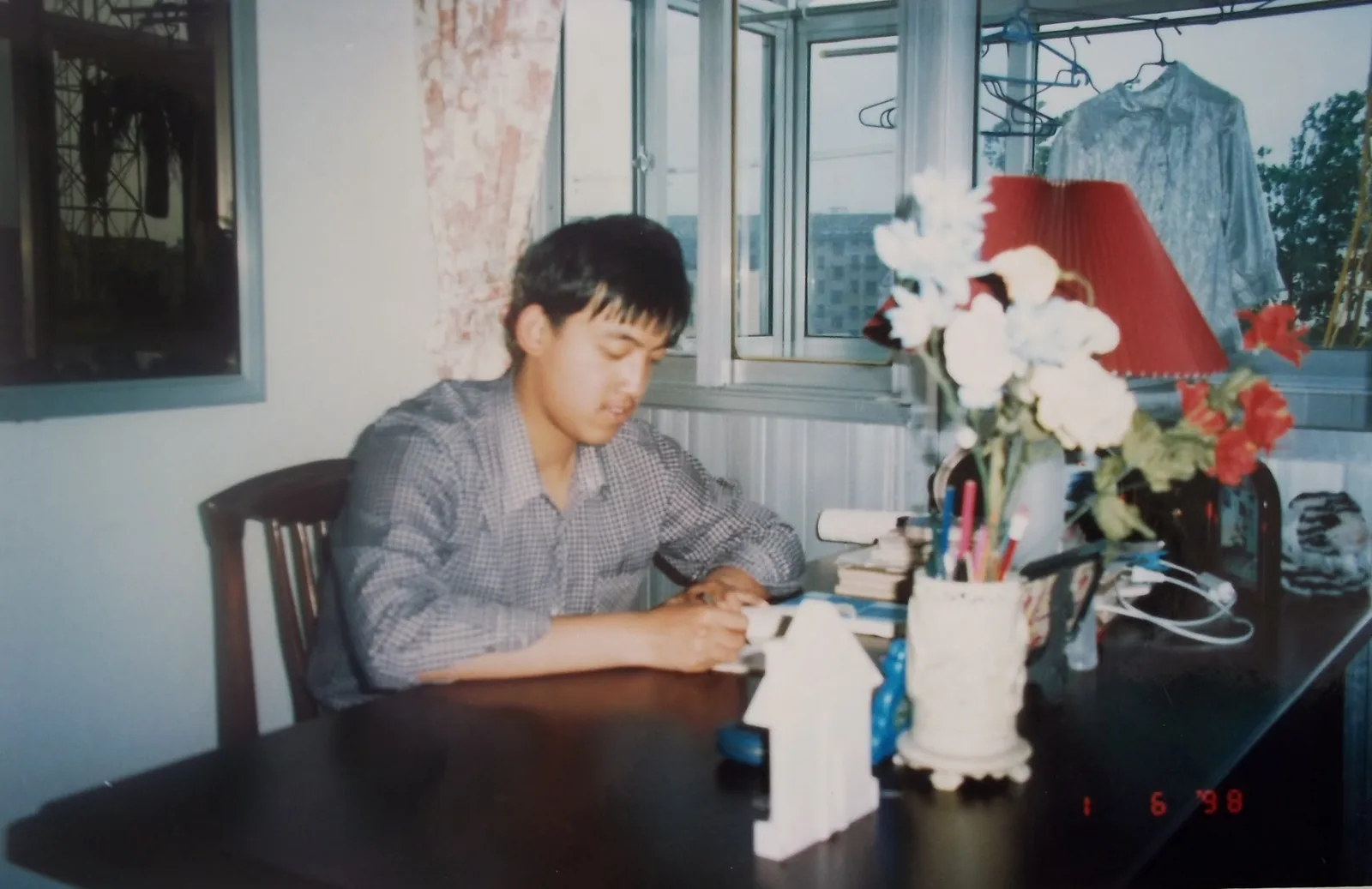
I chose the science track, placed in class 8. Compared to middle school, high school was three utterly枯燥, flavorless years. Study and nothing but study. Three years, over a thousand days, really summarized by a single day. I remember writing a流水账 diary in high school, recording everything from waking at 5:11 AM to sleeping at 11 PM. Nothing特别 worth remembering. Every day after school, I’d walk home with Xu Binbin, Zhang Daming, and Liu Shuyi. I remember seeing Liu Shuyi off to the army — that was the only time I ever skipped evening study sessions and my first time drinking alcohol. This photo is from 1998, second year of high school. I’d study for another hour at this desk after school every day.
University Part 1 (2000-2002)
After the 2000 college entrance exam — I actually overperformed, with a standard score of 752. My father initially wanted me to apply to Sun Yat-sen University because he had many friends in Guangzhou. Then he said I could try a more prestigious school, so I applied to Tongji University. Thirty years east of the river, thirty years west — now Tongji’s ranking is crushed by Sun Yat-sen University. My score wasn’t high enough for Tongji’s most competitive major, civil engineering. I was redirected to accounting. When I got the acceptance letter, I didn’t even know such a major existed. In 2000, I packed my bags and arrived in Shanghai — alone, without a single acquaintance — experiencing independent life for the first time.
By some twist of fate, my homeroom teacher made me the class支部 secretary. Communication back then relied on shouting. Every evening after class, I’d make rounds of the男 dorms, relaying the teacher’s messages, thoroughly enjoying myself. After one year, I found accounting wasn’t very interesting. First, it was too easy — all the math was just加减乘除, exams tested carefulness, not creativity.
That summer after freshman year, I did something that changed my life. I stayed in Shanghai for a month and enrolled in a Municipal Computer Intermediate exam. The content was outdated stuff like assembly language. I suddenly discovered: hey, I’m good at this, I like this. Many people struggled to pass, but I breezed through with distinction. My name was posted on the training school’s wall as a model student. That experience helped me find my passion.
In sophomore year, I was still studying accounting — still easy, no pressure. My father was willing to invest in me; in 2001, he spent 13,000 RMB to buy me a laptop. I spent my days in the dorm teaching myself programming, building websites, and reading stories about IT elites like Bill Gates — thoroughly enjoying myself. I didn’t neglect accounting either, winning first-class scholarships for two consecutive years.
Second semester of sophomore year brought another life-changing event. The government was piloting National Model Software Schools at 35 universities. Tongji was one of them, recruiting transfer students from current sophomores. For me, this was a godsend. I immediately decided to transfer. Another reason: one of my accounting professors said something that hit me hard: “You can innovate in any field except accounting. Accounting must follow the rules — innovation is illegal.” That was致命 to me. I didn’t want to live within someone else’s predetermined framework for the rest of my life. I wanted to do things that would change people’s lives, or at least bring them全新 experiences.
Jobs said every experience is valuable. Looking back, despite not liking accounting, the financial knowledge I gained has benefited me immensely. Especially after entering the workforce — the rapid growth of my family assets owes a lot to what I learned in those two years.
University Part 2 (2002-2004)
Starting junior year, I transferred to the Software School. My life during this period can only be described as a fierce tiger returning to the mountains, a dragon entering the sea. Every day I woke up wanting to write code — that’s the power of passion. No one needed to push me; it was entirely self-driven.
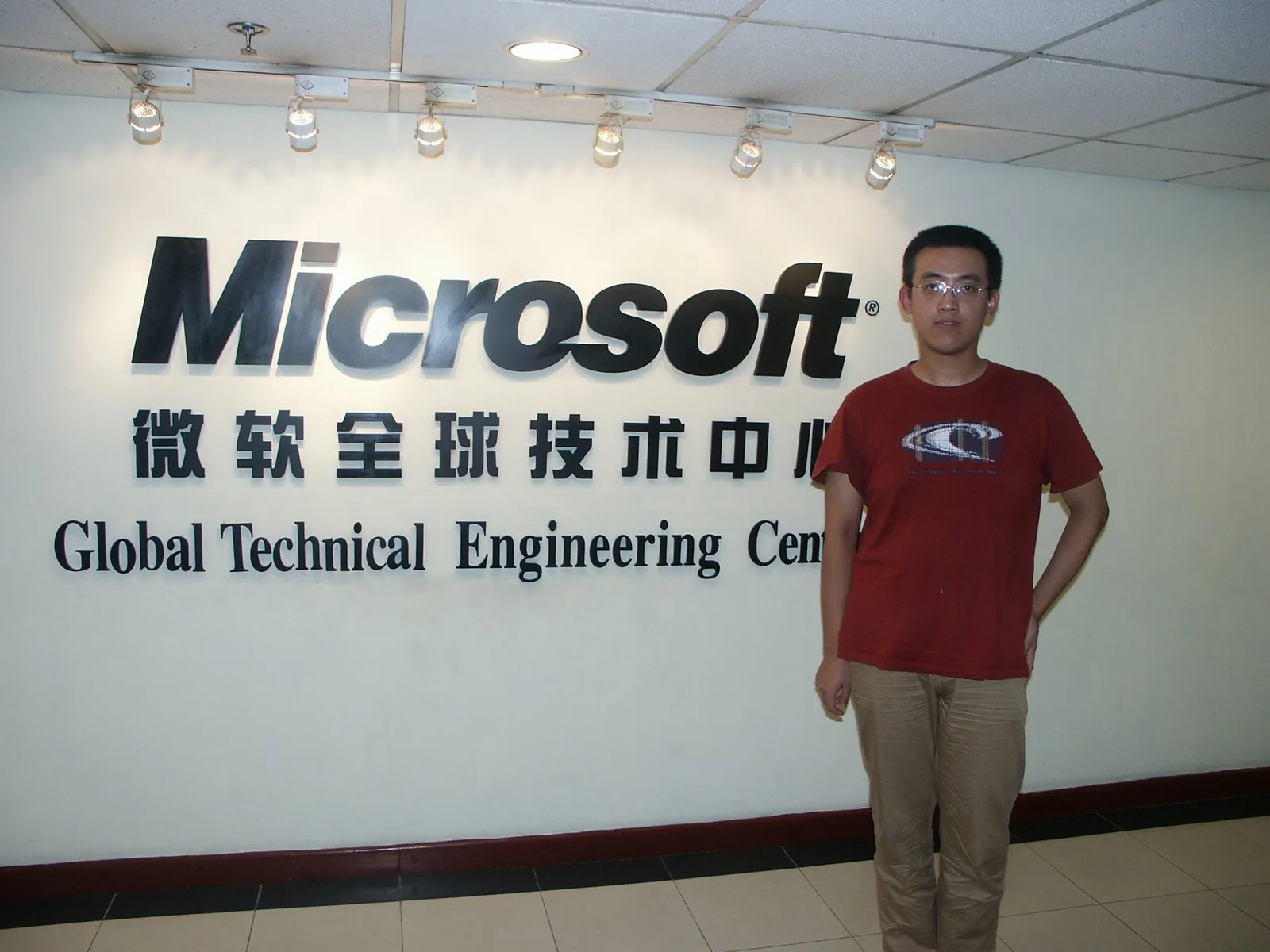
Senior year was even more传奇. Microsoft had only one technical department in China at the time — the Global Technology Center in Shanghai. A kid with only one year of formal computer science education actually applied for an internship. After several rounds of intense interviews at Microsoft, I somehow got in. I spent 8 months at Microsoft. Those 8 months not only skyrocketed my technical skills but also gave me a front-row seat to how a Fortune 500 company operates. This is a photo from my Microsoft internship in September 2003.
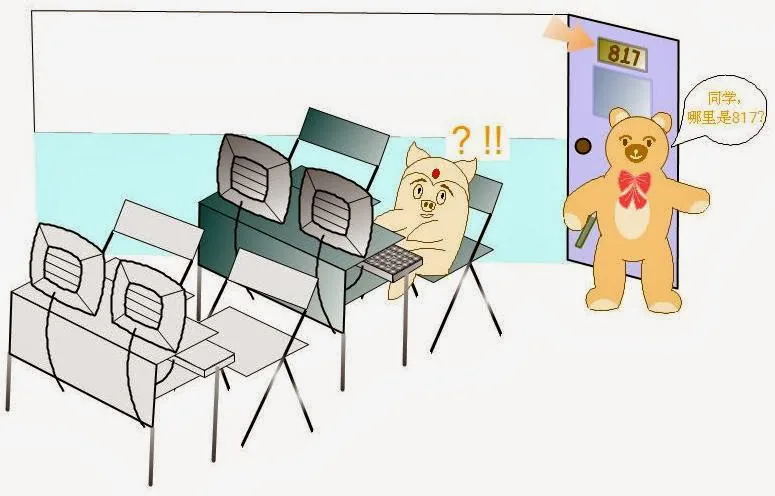
After the internship, I returned to school for my graduation project and became a teaching assistant for students two years below me. This TA experience introduced me to another TA — who is now my wife. It was March 2004. This is her comic-style drawing of our first meeting. I’m bad with numbers; she told me to meet her at room 817. I pushed open room 817 and asked her where room 817 was.
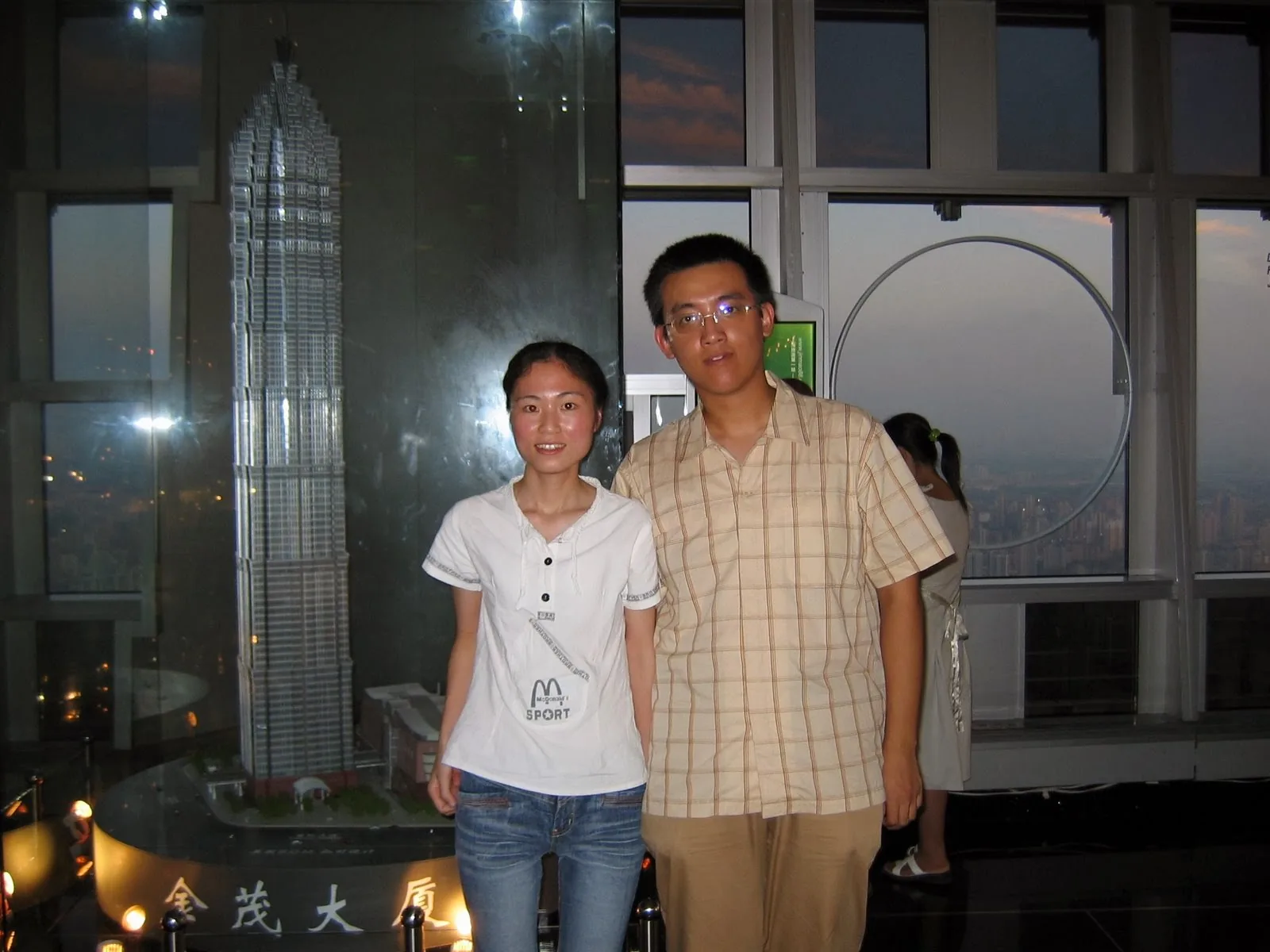
She actually made the first move. She invited us TAs to dinner, then after the meal told everyone else to leave and said to me: “I like you.” I was stunned. It took me a while to collect myself, and I muttered something I can’t even remember. The next day, she went to intern at HP, 30 km from campus. Eventually we got together. Below is a photo from our first date — winter had turned to summer — at Shanghai’s tallest building, Jin Mao Tower. We look so awkwardly dressed in retrospect.
A bit about my wife. Her name is Pan Hong, from Fengqiao Town, Suzhou, Jiangsu Province — the “Fengqiao” from the poem “Mooring by Maple Bridge at Night” (“Outside Gusu City lies Cold Mountain Temple”). Her home is indeed close to Cold Mountain Temple. She’s a year older than me. She has an older sister who studied in Beijing and later stayed there. My wife did her undergraduate at Nanjing Normal University and her master’s at Tongji. When I met her, she was a first-year master’s student and I was a senior.
The last major life-changing event in senior year was joining a research project. This directly led to my current career as a professor and my PhD research direction. I’d been enjoying my time at Microsoft and had a verbal offer. I seriously considered staying after graduation. Then the Software School’s Dean Wan (someone who helped me tremendously) called me back to school — no more interning, come back for a project. They’d secured a key project from the Shanghai Science and Technology Commission, but had no one to work on it. They grabbed me. It involved building an information system for a car developed by Tongji itself (the person who developed this car is now the Minister of Science and Technology, Wan Gang. I used to see him all the time but never got his autograph), using Microsoft’s embedded system Windows CE. Getting started was extremely difficult, but once I figured it out, things went smoothly.
Master’s Degree (2004-2007)
My three years of master’s study were extremely depressing. The Software School was newly established and didn’t have master’s points, so I was保研 to the Computer Science department. The depression came from not learning anything. First year was coursework — the CS department’s courses were far too easy, no challenge at all. From the second year, my advisor sent me to his own software company in Zhangjiang to write code — same 9-to-5 schedule as employees, but without pay. I developed mild depression and nearly dropped out several times. Under my parents’ threats and Pan Hong’s encouragement, I stuck with it. The biggest failure of these three years was never properly learning research — I just became a proficient code monkey, which is why my current PhD is so艰苦. The biggest success was dramatically improving my mental resilience. After three years of depression, I’m not afraid of any setback.
Two other things from my master’s years worth mentioning: writing a book and teaching.
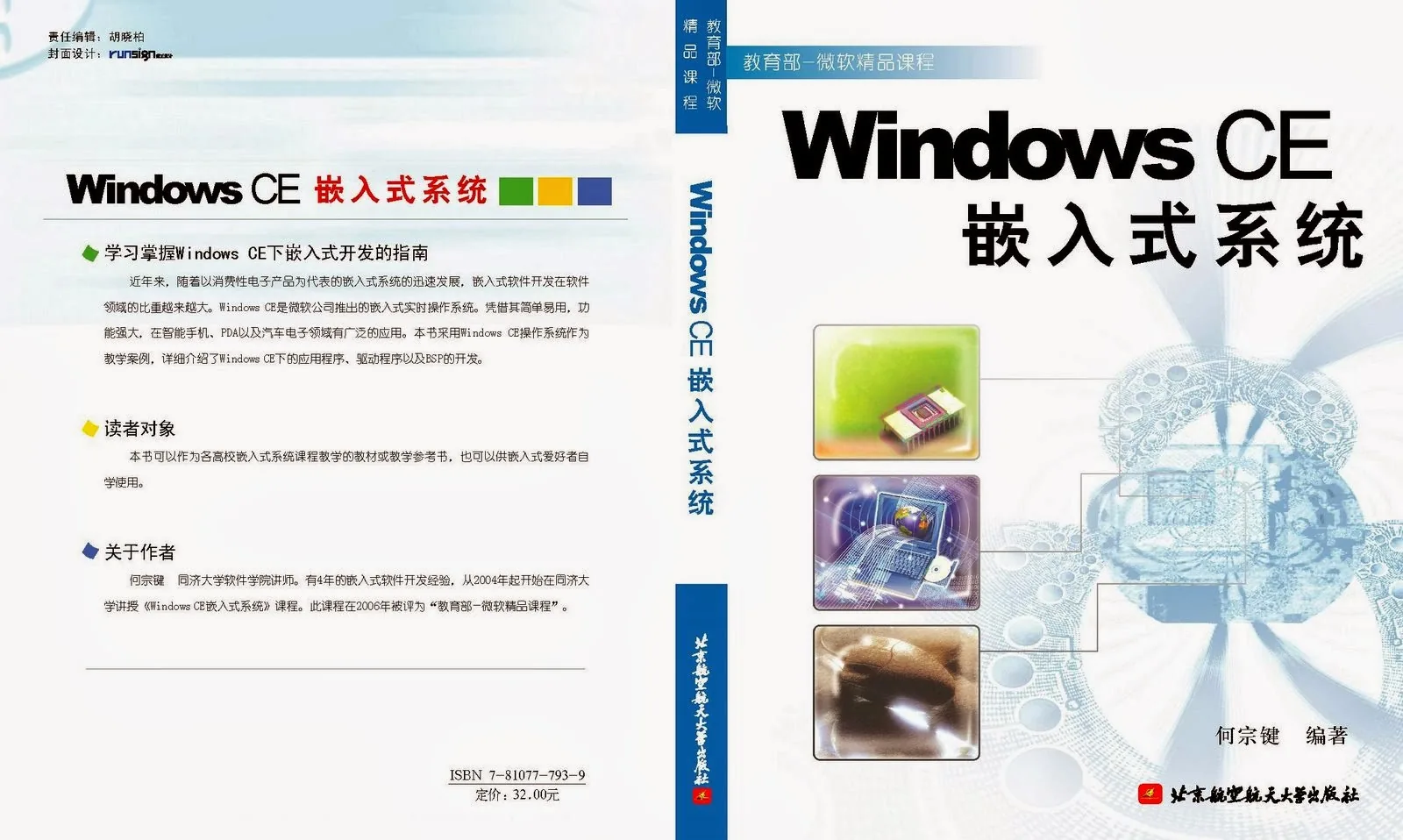
With no academic pressure, I thought about how difficult that research project was at the start — all because Windows CE was so new with no reference books, only Microsoft’s English docs. Why not write one myself? That became my first book: “Windows CE Embedded Systems.” It’s now out of print. It filled a market gap, and I genuinely poured my heart into it. The market rewarded me handsomely. Even after I came to Hong Kong for my PhD, I received royalty payments of several thousand RMB.
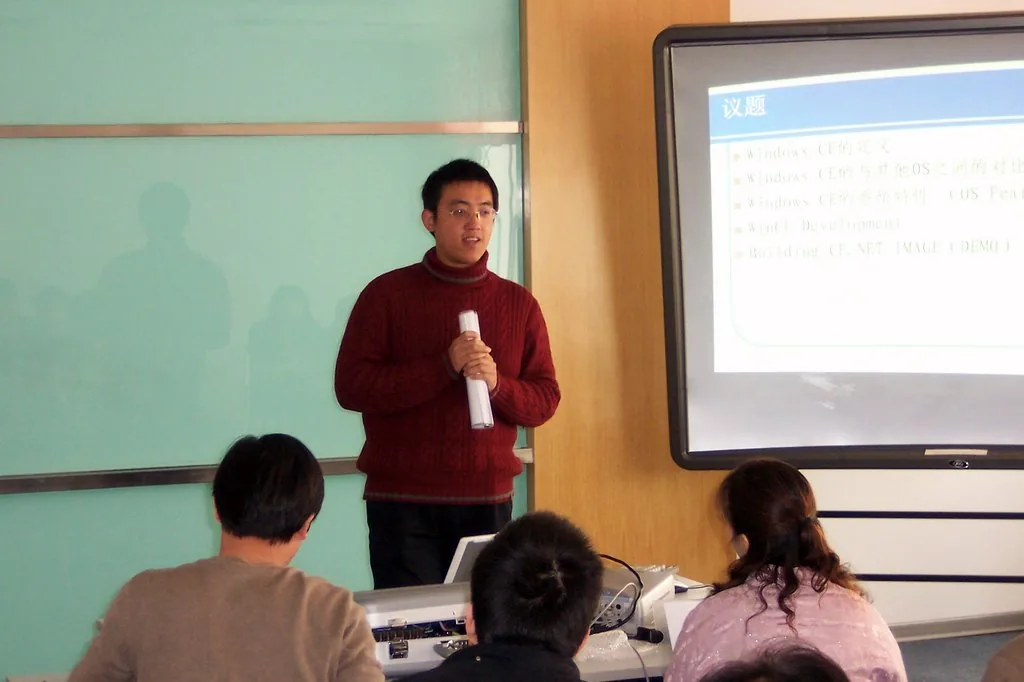
Teaching had two parts. One was at Tongji Software School — Windows CE was so hot that Dean Wan decided to offer the course, but couldn’t find a teacher, so he asked me. Having a master’s student teach is technically against regulations, but that was Dean Wan’s boldness — I deeply respect him for it. The other was corporate training. Because of the book, many companies invited me to train their engineers. I felt pretty important. Media interviewed me, Programmer magazine solicited articles, and I was invited to speak at events like the C++ 20th Anniversary Conference. I got a bit carried away, thinking I was nationally famous. Naive and foolish in hindsight. Below is a photo from 2006, when a company invited me to give training.
Work (2007-2011)
After graduating in 2007, Dean Wan strongly invited me to stay and teach. The Software School was indeed understaffed. Nowadays, forget about master’s — even domestically-trained PhDs can’t easily land a teaching position at Tongji. I stayed after graduation. Initially, I worked with the Shanghai Academy of Spaceflight Technology on a project and quite enjoyed it. I was responsible for developing the software system for the Yinghuo-1 Mars probe. It was classified at the time — I couldn’t talk about it. Now everyone knows: China didn’t have the technology to send a satellite to Mars, so we used a Russian rocket. In 2012, that rocket carried my code into the Pacific Ocean. At least it was Russia’s fault, not mine.
Half a year later, in early 2008, the Software School went through some upheaval. The previous leadership collapsed and a completely new team took over. I was quite depressed. Dean Wan, who had greatly valued me, resigned and went to Canada. The new Dean Liu (very young, only 4 years older than me, a female PhD returned from the UK) thought highly of me and appointed me as the Dean’s Assistant (sometimes misleadingly called Assistant Dean externally). It was a fairly high administrative rank. I embarked on an administrative path. I was responsible for corporate partnerships, visiting Fortune 500 IT companies’ China headquarters every day — Google, Microsoft, IBM — wearing out my shoes promoting our students and seeking collaboration. I did this until I went to Hong Kong for my PhD in 2011.
Administrative work was a double-edged sword. On one hand, my status at the university was high, the income was good, and I had resources — China is官本位 after all. On the other hand, most of my time was spent on琐事 with little technical content — coordinating relationships, drafting policies. Those years as Dean’s Assistant nearly ruined my technical skills. And one ugly aspect of human nature is that it’s easy to stay in your psychological comfort zone, like a frog in slowly heating water. At the time, I felt my income was good, family was good, social status was good — everything was good. Looking back now, it sends chills down my spine. I nearly became that boiled frog, losing myself in comfort.
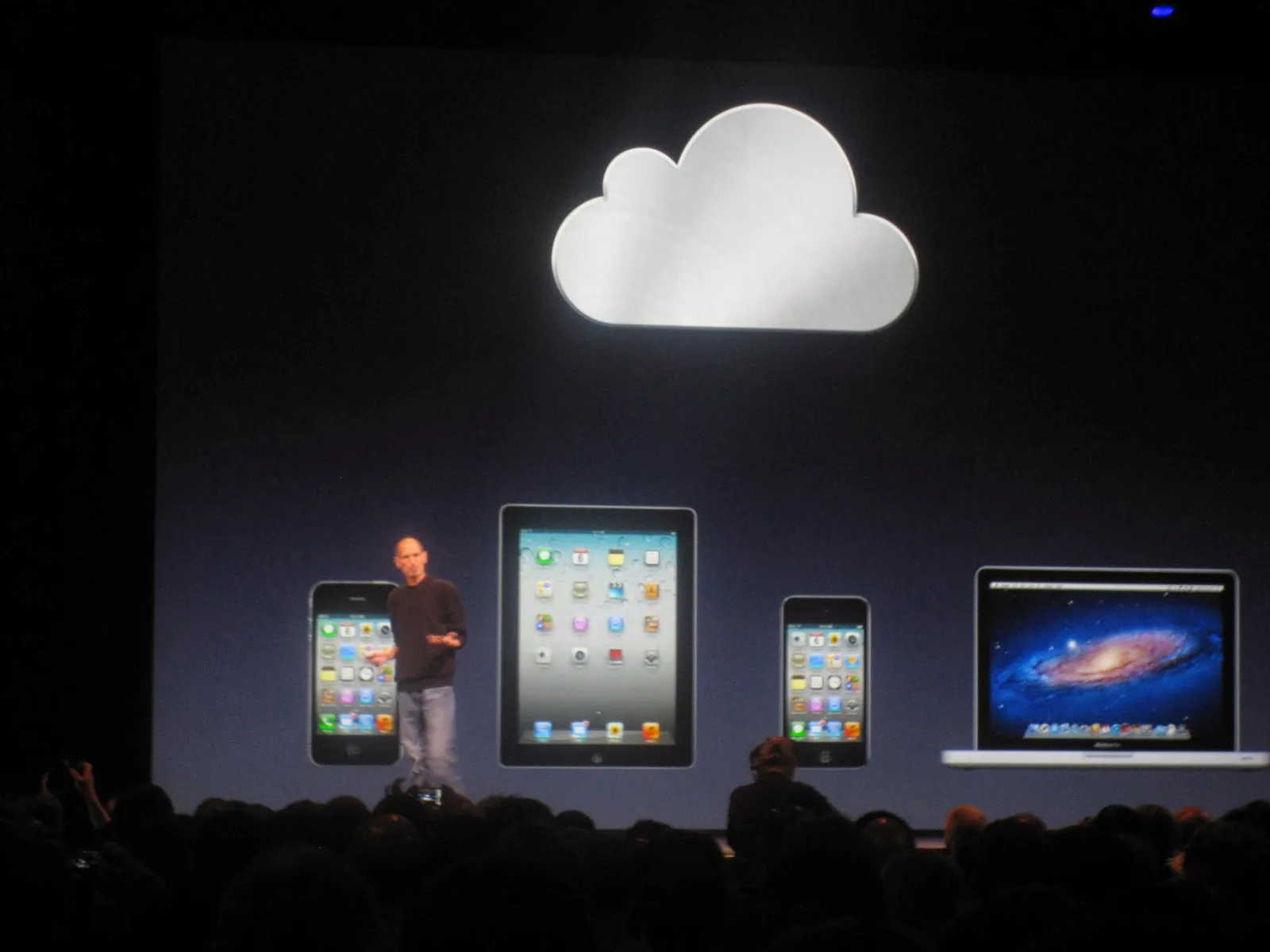
Nothing特别 memorable happened during my work years. I went to the US three times, Canada once, and Sweden once. In 2008 and 2011, Apple invited me to San Francisco for their developer conference. I witnessed Jobs launch the iPhone 3G and iCloud. That’s what made me a devoted Apple fan. Jobs’ personal charisma was unmatched. Before his keynote, I’d never owned any Apple device. But after the keynote, I couldn’t keep my wallet closed — I rushed to the nearest Apple Store wanting to buy an iPhone. Below is from 2011, Jobs’ last public speech before his death, launching iCloud. I was fortunate to be just 50 meters from Jobs, witnessing the cancer-stricken, dying Jobs still energetically introducing Apple’s latest revolutionary technology.
In 2008, my university sent me to teach in Dingxi, Gansu for two months. This also had a huge impact on me. Well, “teaching” — since it was summer break, I was actually assigned to the local government’s IT office. I witnessed firsthand the hardship of life on the黄土高原 in western China. Below is a photo I took from the train to Dingxi — a river, all yellow. Severe soil erosion. Dingxi was incredibly short of water. We had no drinking water and had to drink cellar water — rainwater collected during storms. I also discovered many problems with Project Hope and left-behind children.

PS: I’ve written more detailed blogs about my education and work experience. This is the abridged version. If interested, search my blog for the series “From Student to Teacher.”
Family (2008-2013)
After meeting my wife in 2004, while I was in grad school, she actually finished her master’s early in 2005 and stayed to work at HP. Also in Zhangjiang. We lived close — I’d often bike her to and from work. Those were sweet days. I traveled a lot for work back then, and we went together to Xiamen, Wuhan, Changsha, Nanjing, Beijing — nearly half of China. I remember her first flight: the plane was at 5:30 AM and she left the house at 5 — she thought you could chase after a plane like a bus, and if it left, you could catch it. In 2008, we finally got married.
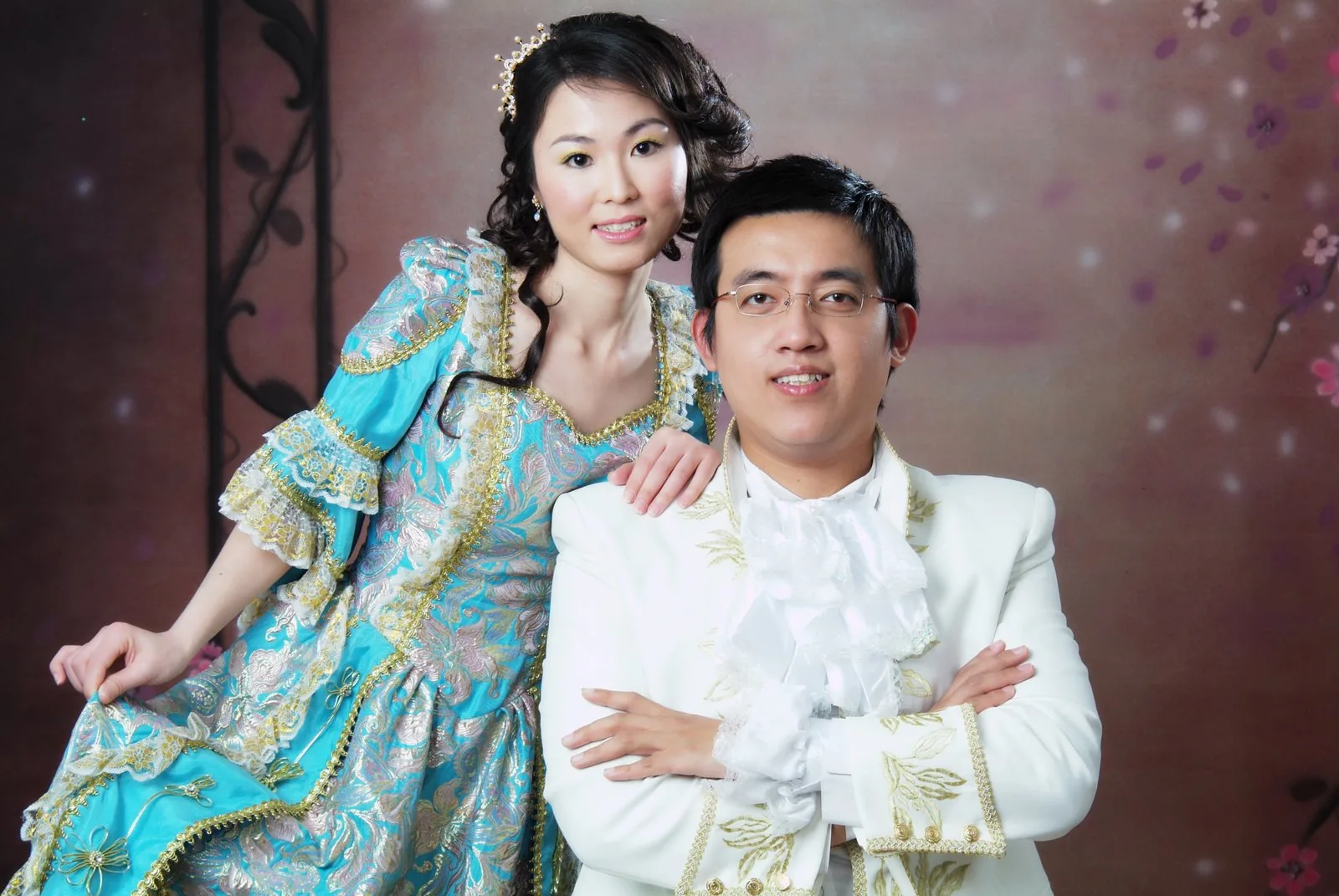
Our wedding had many interesting stories. Northern and southern customs are so different I can’t list them all. Here’s one: In Suzhou, there’s a tradition where a family plants a camphor tree in the yard when a daughter is born. When she marries, they cut it down to make trunks — it’s called “two trunks willing” (a pun on mutual consent). If the tree dies, the daughter has to return home and remarry or something. I brought that little sapling to Shandong, thinking it was some kind of flower. I planted it in a pot. Well, “oranges south of the Huai become trifoliate oranges north of the Huai.” It died within days. Her mother kept asking: “How’s that plant doing?” “Oh, it’s great, it’s even flowering!” “Flowering? That’s a tree — how could it flower?” Me: “…”
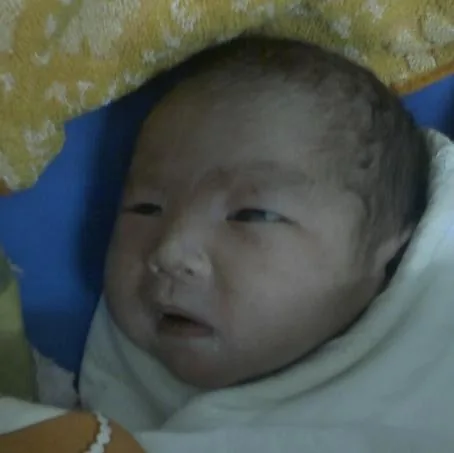
On February 23, 2009, our son was born. Our family has a genealogical naming system. He is the surname, Shi is the generation character — I can’t change those. Qian is the name I gave him. This is He Shiqian’s first photo, taken with my phone.
After our son was born, the entire family’s energy focused on him. My father is incredible — he put his entire business on hold and came to Shanghai with my mother to take care of Qian. They still do. My father and Qian live in the city center, with my father taking Qian to kindergarten every day. My wife lives in the suburbs and visits on weekends.
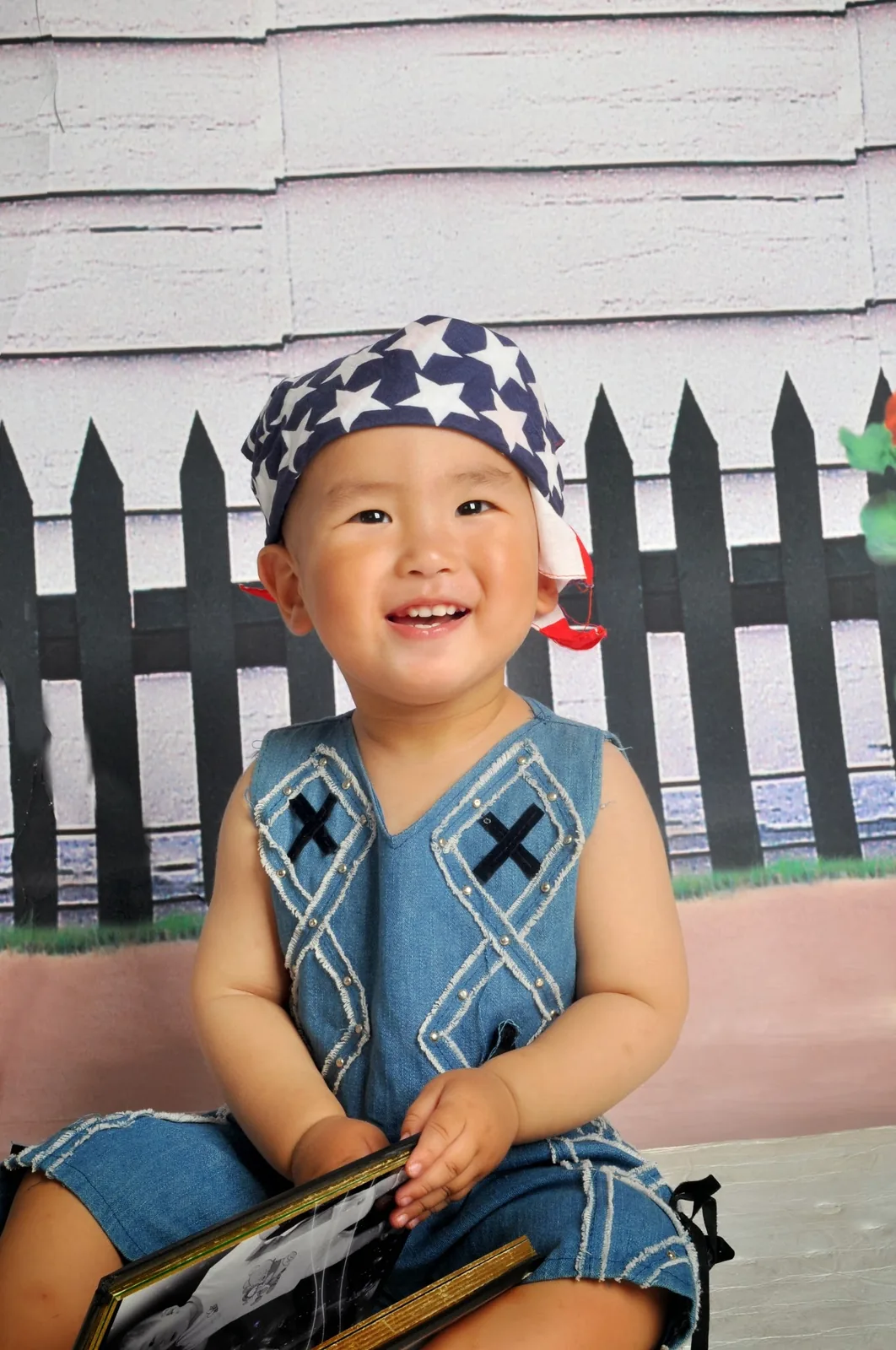
These years of study have kept me separated from Qian for long periods. His growth has been fragmented in my memory. When I went home in early 2013, I often had this feeling: “Is this really my son?” It felt like the cute little guy I saw every day before going abroad — the one who couldn’t even string together a full sentence — had been taken away and replaced by someone else. Overnight, he became a very logical, strong-willed child. His once-introverted personality was completely gone — he loves being in the spotlight. He’s public-spirited, polite, and learns fast. Apart from poor self-care skills and a stubborn personality (spoiled by my parents), he’s otherwise perfect. He often says things that surprise me and does things that amaze me. But I always feel his growth process is discrete in my memory — with serious gaps in between. This might be a lifelong shadow for him, the price I must pay for pursuing my education. I don’t know if it can be made up. If possible, I’d spend several times the effort to compensate for the three years I missed being away from Qian.
It’s been exactly 10 years since I met my wife, and 5 years since we married. A third of my life has been spent with this woman. Naturally, there have been ups and downs. But cracks in our relationship surfaced in 2013, forcing me to reflect on my experiences and actions. In a nutshell: “I didn’t give her a sense of security, and she didn’t give me a sense of trust.” Security and trust are higher-level needs in Maslow’s hierarchy. Our basic survival and material needs are well taken care of. There was a time when I considered giving up. Communication is most important — we’ve communicated far too little. The goal of communication isn’t to convince her to obey me, but to let her know who I am, what I think about family and life. Basically, aligning our worldviews. I don’t want conclusions drawn from incomplete information. The good news: after some effort, things aren’t as bad as I imagined. She’s still someone I can talk to. She agreed and accepted my plan to publicly share all my Hong Kong experiences after five years, which made me deeply feel she does trust me. Maybe she’s the one who can walk through life with me.
PS: My wife also has a blog recording her thoughts. URL: http://panhong.hezongjian.com/
PhD (2011-Present)
In July 2011, I came to Hong Kong Polytechnic University to begin my three-year PhD journey. This is my final year. Overall, these years have had a tremendous impact on my thinking, awareness, and even my outlook on life and values. It’s not an exaggeration to say I was reborn in Hong Kong.
First, educational philosophy. I’d always received a Chinese education, which follows the Soviet model. Hong Kong’s education follows the British model. This has been a huge shock to my educational philosophy. Many things I took for granted turned out to be wrong — like China’s credit system and graduation certificates. And their system seems better. It’s been a complete worldview reconstruction. See my other blog post for details: http://hezongjian.com/blog/?p=10677
Second, lifestyle. Overall, Hong Kong people have a very positive attitude toward life. They pursue what they love and what they find meaningful. Also, healthy living — Hong Kong has the longest life expectancy in the world, and for good reason. I’ve developed a fitness habit. When I arrived in Hong Kong, I weighed 200 jin (100 kg). Now I’m down to 150 jin (75 kg). Partly from study pressure, partly from exercise. Now I can feel the two abs on my flat stomach and can’t believe my waist was once 3尺3 (43 inches). Even if I don’t graduate, this trip to Hong Kong has given me at least 10-20 more years of life.
Third, academic knowledge. Hong Kong is a great place for pure academic pursuit. I’ve learned how to do research here — finally入门. It’s embarrassing — this should have been trained at the master’s level, but I’m so late, partly due to my master’s advisor and partly because I went into administration after graduating. I’d never fallen behind in my studies until Hong Kong. Suddenly, I was indisputably last in my group. The research pressure is immense. I have so much to catch up on. I don’t know if I’ll get my PhD. Hong Kong treats talent development seriously — unlike mainland China where everyone graduates, they have strict淘汰 rates. But I haven’t given up. Because I genuinely love my research, hope to make it my lifelong career, and firmly believe my current research can change all of human life in the future. So I’m not afraid of hardship or exhaustion. Living in a 4-square-meter shared apartment with cockroaches, sleeping four hours a night, working seven days a week — I fear nothing, only seeking truth.