ChatGPT Writes Tetris
ChatGPT has been blowing up lately. Hype-men say it can write code, pass the US bar exam, even replace humans. I think that’s exaggerated. My view: ChatGPT often confidently spouts nonsense. It might be good for creative work (drawing, fiction — where truth doesn’t matter), but for fact-checking, it falls short. The right attitude is knowing what this tool can and can’t do. Just like power drills — they’re a huge improvement over hand tools, but you wouldn’t say a drill replaces every woodworking tool. Use it for what it’s good at, use something else for what it’s not. Same with ChatGPT. Today, let’s see what ChatGPT can create.
Starting simple: a little game. Tetris is straightforward — everyone’s played it, many beginners have written it. I remember learning to program in 2000 with Visual Basic 6, dragging controls onto a form to make a playable block game. Now let’s try with ChatGPT.
Step 1
Opened ChatGPT, asked:
can you please write a Tetris game in python for me?
It replied instantly:
Certainly! I can provide you with a basic implementation of the Tetris game in Python. Keep in mind that this implementation may not include all advanced features or graphics, but it should give you a good starting point. Here's the code:
Then came pages of code:
import pygame
import random

# Initialize the game
pygame.init()

# Set up the display
screen_width, screen_height = 800, 600
play_width, play_height = 300, 600
block_size = 30

top_left_x = (screen_width - play_width) // 2
top_left_y = screen_height - play_height

# Colors (RGB format)
WHITE = (255, 255, 255)
BLACK = (0, 0, 0)
RED = (255, 0, 0)
GREEN = (0, 255, 0)
BLUE = (0, 0, 255)
CYAN = (0, 255, 255)
MAGENTA = (255, 0, 255)
YELLOW = (255, 255, 0)
ORANGE = (255, 165, 0)
PURPLE = (128, 0, 128)

# Define the shapes of the tetrominoes
S = [['.....',
      '.....',
      '..00.',
      '.00..',
      '.....'],
     ['.....',
      '..0..',
      '..00.',
      '...0.',
      '.....']]

Z = [['.....',
      '.....',
      '.00..',
      '..00.',
      '.....'],
     ['.....',
      '..0..',
      '.00..',
      '.0...',
      '.....']]

I = [['..0..',
      '..0..',
      '..0..',
      '..0..',
      '.....'],
     ['0000.',
      '.....',
      '.....',
      '.....',
      '.....']]

O = [['.....',
      '.....',
      '.00..',
      '.00..',
      '.....']]

J = [['.....',
      '.0...',
      '.000.',
      '.....',
      '.....'],
     ['.....',
      '..00.',
      '..0..',
      '..0..',
      '.....'],
     ['.....',
      '.....',
      '.000.',
      '...0.',
      '.....'],
     ['.....',
      '..0..',
      '..0..',
      '.00..',
      '.....']]

L = [['.....',
      '...0.',
      '.000.',
      '.....',
      '.....'],
     ['.....',
      '..0..',
      '..0..',
      '..00.',
      '.....'],
     ['.....',
      '.....',
      '.000.',
      '.0...',
      '.....'],
     ['.....',
      '.00..',
      '..0..',
      '..0..',
      '.....']]

T = [['.....',
      '..0..',
      '.000.',
      '.....',
      '.....'],
     ['.....',
      '..0..',
      '..00.',
      '..0..',
      '.....'],
     ['.....',
      '.....',
      '.000.',
      '..0..',
      '.....'],
     ['.....',
      '..0..',
      '.00..',
      '..0..',
      '.....']]

shapes = [S, Z, I, O, J, L, T]
shape_colors = [GREEN, RED, CYAN, YELLOW, BLUE, ORANGE, PURPLE]


class Piece(object):
    rows = 20
    columns = 10

    def __init__(self, column, row, shape):
        self.x = column
        self.y = row
        self.shape = shape
        self.color = shape_colors[shapes.index(shape)]
        self.rotation = 0


def create_grid(locked_positions={}):
    grid = [[BLACK for _ in range(Piece.columns)] for _ in range(Piece.rows)]

    for row in range(Piece.rows):
        for column in range(Piece.columns):
            if (column, row) in locked_positions:
                color = locked_positions[(column, row)]
                grid[row][column] = color

    return grid


def convert_shape_format(piece):
    positions = []
    shape_format = piece.shape[piece.rotation % len(piece.shape)]

    for row in range(len(shape_format)):
        for column in range(len(shape_format[row])):
            if shape_format[row][column] == '0':
                positions.append((piece.x + column, piece.y + row))

    for i, pos in enumerate(positions):
        positions[i] = (pos[0] - 2, pos[1] - 4)

    return positions


def valid_space(piece, grid):
    accepted_positions = [[(column, row) for column in range(Piece.columns) if grid[row][column] == BLACK] for row in range(Piece.rows)]
    accepted_positions = [position for sublist in accepted_positions for position in sublist]

    formatted_shape = convert_shape_format(piece)

    for pos in formatted_shape:
        if pos not in accepted_positions:
            if pos[1] > -1:
                return False

    return True


def check_lost(positions):
    for pos in positions:
        x, y = pos
        if y < 1:
            return True

    return False


def draw_text_middle(surface, text, size, color):
    font = pygame.font.SysFont('comicsans', size, bold=True)
    label = font.render(text, 1, color)

    surface.blit(label, (top_left_x + play_width/2 - (label.get_width()/2), top_left_y + play_height/2 - label.get_height()/2))


def draw_grid(surface, grid):
    for row in range(Piece.rows):
        for column in range(Piece.columns):
            pygame.draw.rect(surface, grid[row][column], (top_left_x + column*block_size, top_left_y + row*block_size, block_size, block_size))

    pygame.draw.rect(surface, RED, (top_left_x, top_left_y, play_width, play_height), 4)


def clear_rows(grid, locked):
    full_rows = []
    for row in range(Piece.rows):
        if BLACK not in grid[row]:
            full_rows.append(row)

    for full_row in full_rows:
        del grid[full_row]
        grid.insert(0, [BLACK for _ in range(Piece.columns)])

    for row in full_rows:
        for position in range(Piece.columns):
            if (position, row) in locked:
                del locked[(position, row)]

    return len(full_rows)


def draw_next_shape(piece, surface):
    font = pygame.font.SysFont('comicsans', 30)
    label = font.render('Next Shape', 1, WHITE)

    x = top_left_x + play_width + 50
    y = top_left_y + play_height/2 - 100
    shape_format = piece.shape[piece.rotation % len(piece.shape)]

    for row in range(len(shape_format)):
        for column in range(len(shape_format[row])):
            if shape_format[row][column] == '0':
                pygame.draw.rect(surface, piece.color, (x + column*block_size, y + row*block_size, block_size, block_size), 0)

    surface.blit(label, (x + 10, y - 30))


def draw_window(surface, grid, score=0):
    surface.fill(BLACK)
    pygame.font.init()
    font = pygame.font.SysFont('comicsans', 60)
    label = font.render('Tetris', 1, WHITE)

    surface.blit(label, (top_left_x + play_width/2 - (label.get_width()/2), 30))

    # Score
    font = pygame.font.SysFont('comicsans', 30)
    label = font.render('Score: ' + str(score), 1, WHITE)

    x = top_left_x - 200
    y = top_left_y + 200

    surface.blit(label, (x + 20, y + 160))

    for row in range(len(grid)):
        for column in range(len(grid[row])):
            pygame.draw.rect(surface, grid[row][column], (top_left_x + column*block_size, top_left_y + row*block_size, block_size, block_size))

    pygame.draw.rect(surface, RED, (top_left_x, top_left_y, play_width, play_height), 4)

    draw_grid(surface, grid)


def main():
    locked_positions = {}
    grid = create_grid(locked_positions)

    change_piece = False
    run = True
    current_piece = Piece(5, 0, random.choice(shapes))
    next_piece = Piece(5, 0, random.choice(shapes))
    clock = pygame.time.Clock()
    fall_time = 0
    fall_speed = 0.27
    level_time = 0
    score = 0

    while run:
        grid = create_grid(locked_positions)
        fall_time += clock.get_rawtime()
        level_time += clock.get_rawtime()
        clock.tick()

        if level_time/1000 > 5:
            level_time = 0
            if fall_speed > 0.12:
                fall_speed -= 0.005

        if fall_time/1000 > fall_speed:
            fall_time = 0
            current_piece.y += 1
            if not (valid_space(current_piece, grid)) and current_piece.y > 0:
                current_piece.y -= 1
                change_piece = True

        for event in pygame.event.get():
            if event.type == pygame.QUIT:
                run = False
                pygame.display.quit()

            if event.type == pygame.KEYDOWN:
                if event.key == pygame.K_LEFT:
                    current_piece.x -= 1
                    if not valid_space(current_piece, grid):
                        current_piece.x += 1

                elif event.key == pygame.K_RIGHT:
                    current_piece.x += 1
                    if not valid_space(current_piece, grid):
                        current_piece.x -= 1

                elif event.key == pygame.K_DOWN:
                    current_piece.y += 1
                    if not valid_space(current_piece, grid):
                        current_piece.y -= 1

                elif event.key == pygame.K_UP:
                    current_piece.rotation += 1
                    if not valid_space(current_piece, grid):
                        current_piece.rotation -= 1

        shape_positions = convert_shape_format(current_piece)

        for i, pos in enumerate(shape_positions):
            x, y = pos
            if y > -1:
                grid[y][x] = current_piece.color

        if change_piece:
            for pos in shape_positions:
                p = (pos[0], pos[1])
                locked_positions[p] = current_piece.color

            current_piece = next_piece
            next_piece = Piece(5, 0, random.choice(shapes))
            change_piece = False
            score += clear_rows(grid, locked_positions)

        draw_window(win, grid, score)
        draw_next_shape(next_piece, win)
        pygame.display.update()

        if check_lost(locked_positions):
            run = False

    draw_text_middle(win, "You lost!", 80, WHITE)
    pygame.display.update()
    pygame.time.delay(2000)


win = pygame.display.set_mode((screen_width, screen_height))
pygame.display.set_caption('Tetris')
main()
I skimmed it — uses the pygame library. Saved it as a .py file and ran it. It actually worked. With scoring, different colors for different blocks. Pretty surprising.
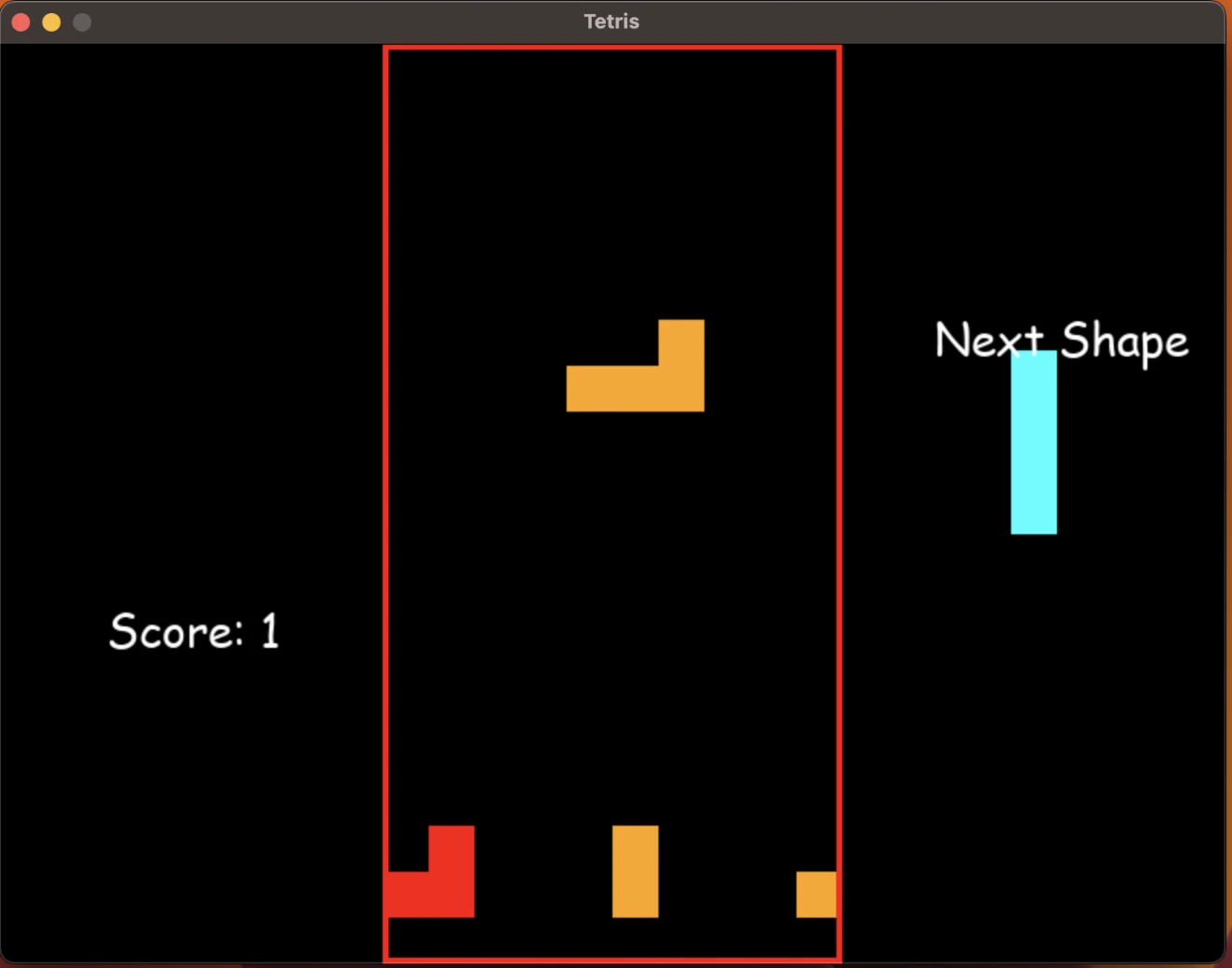
But problems showed up fast. When a row was filled and cleared, the blocks above didn’t fall down — they just hovered in mid-air.
Fixing It
I hadn’t looked at the code yet, so I asked ChatGPT:
your clear_rows has a bug, after a row is cleared, the other blocks won't fall
ChatGPT, always humble, immediately admitted fault — even when it might be right.
Apologies for the oversight. You're right; there is a bug in the clear_rows function that prevents the blocks from falling after a row is cleared. Here's an updated version of the clear_rows function that fixes the issue:

def clear_rows(grid, locked):
    full_rows = []
    for row in range(Piece.rows):
        if BLACK not in grid[row]:
            full_rows.append(row)

    for full_row in full_rows:
        # Clear the row
        del grid[full_row]
        grid.insert(0, [BLACK for _ in range(Piece.columns)])

    # Update the positions of the locked blocks
    for row in range(len(grid)):
        for column in range(len(grid[row])):
            if grid[row][column] != BLACK:
                if (column, row) in locked:
                    del locked[(column, row)]
                locked[(column, row + len(full_rows))] = grid[row][column]

    return len(full_rows)
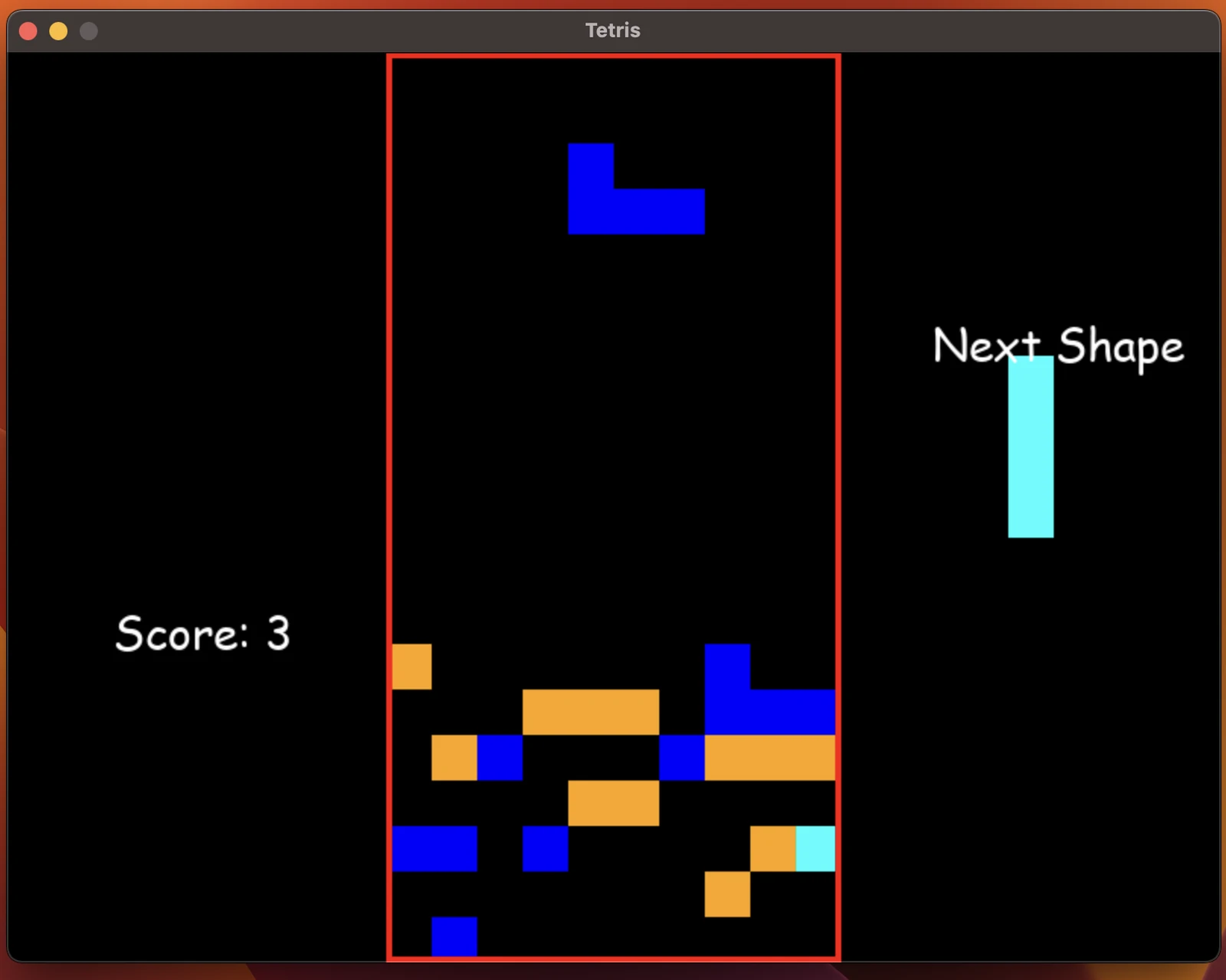
Still didn’t read the code. Replaced the function and ran it. Worse. The cleared row turned into garbage.
Kept at it. ChatGPT gave several more versions — some crashed, some had weird issues. Here’s version 5:
def clear_rows(grid, locked):
    full_rows = []
    for row in range(Piece.rows):
        if BLACK not in grid[row]:
            full_rows.append(row)

    for full_row in full_rows:
        del grid[full_row]
        grid.insert(0, [BLACK for _ in range(Piece.columns)])

    # Update the positions of the locked blocks
    new_locked = {}
    for position, color in locked.items():
        x, y = position
        if y < full_rows[0]:
            new_locked[(x, y + len(full_rows))] = color
        else:
            new_locked[(x, y)] = color

    return len(full_rows), new_locked
Still crashed. I finally got annoyed enough to read the code. The function returns a tuple but the caller expected an int. I told ChatGPT:
this is even worse. when a block drop I got this error:  Traceback (most recent call last):
  File "/Users/zhe203/dev/playground/PyTetris/main.py", line 453, in <module>
    main()
  File "/Users/zhe203/dev/playground/PyTetris/main.py", line 437, in main
    score += clear_rows(grid, locked_positions)
TypeError: unsupported operand type(s) for +=: 'int' and 'tuple'

you can not return a tuple for clear_rows. because in your code score += clear_rows(grid, locked_positions), you're expecting to return an integer
ChatGPT fixed it quickly:
def clear_rows(grid, locked):
    full_rows = []
    for row in range(Piece.rows):
        if all(grid[row]):
            full_rows.append(row)

    if len(full_rows) > 0:
        for row in full_rows:
            del grid[row]
            grid.insert(0, [BLACK] * Piece.columns)

        # Update the positions of the locked blocks
        new_locked = {}
        for position, color in locked.items():
            x, y = position
            if y not in full_rows:
                if y < max(full_rows):
                    new_locked[(x, y + len(full_rows))] = color
                else:
                    new_locked[(x, y)] = color

        return len(full_rows)

    return 0
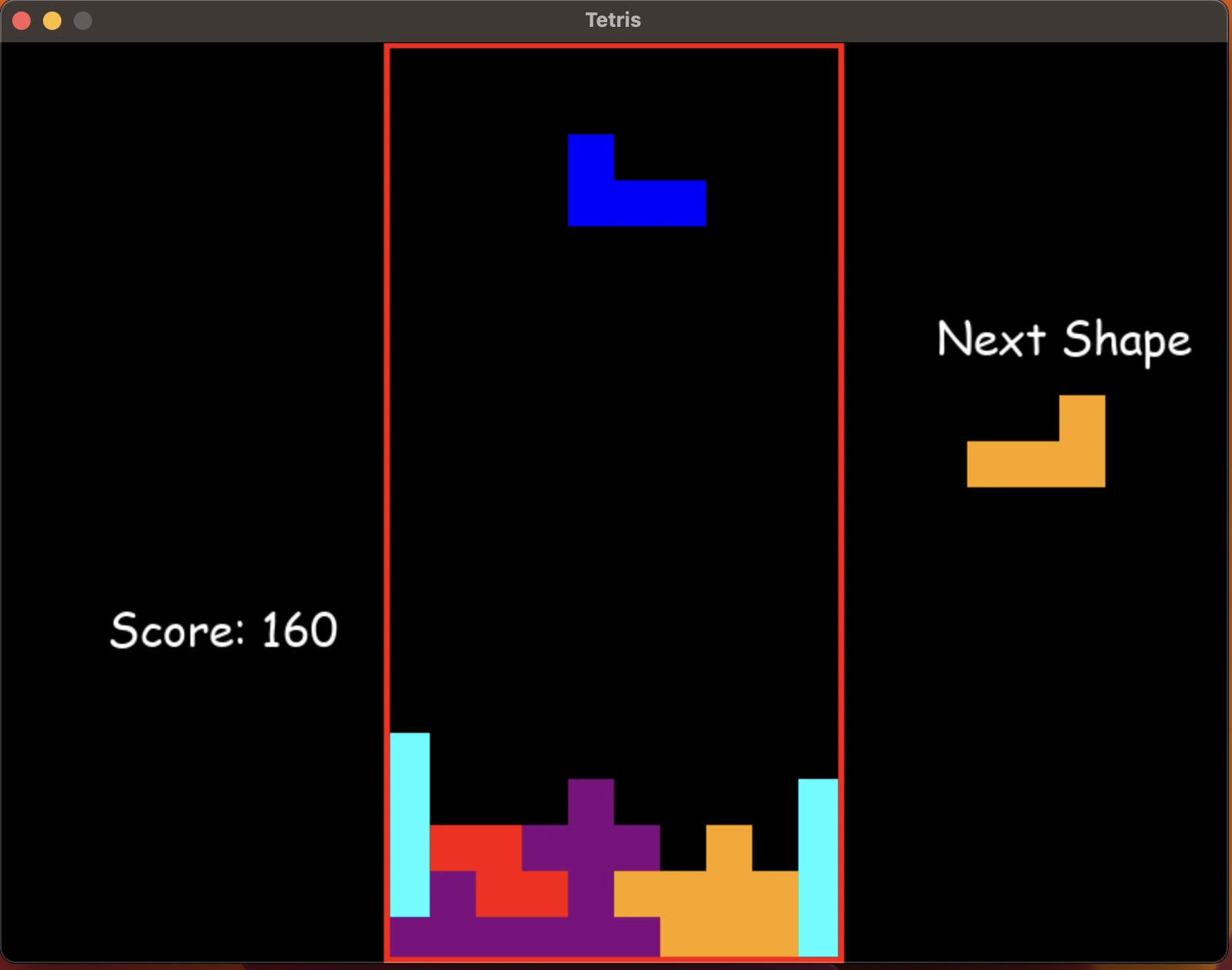
Now it was playable. But still buggy — a full row wouldn’t clear, it’d just keep stacking up.
After 5 versions wasting a lot of time, I gave up on ChatGPT fixing it. Finally read the code myself.
Reading the Code
ChatGPT’s generated code was actually decent — basic logic in place, comparable to a junior programmer. The bug wasn’t hard to find with a debugger. I fixed it in 2 lines:
(earn, locked_positions) = clear_rows(grid, locked_positions)
score += earn * 10
Since ChatGPT was so keen on returning a tuple, I just called it like a tuple. The second line was auto-added by GitHub Copilot — ChatGPT gave 1 point per cleared row, but another GPT-4-powered AI decided it should be 10. I left it.
Summary
ChatGPT can boost productivity. Writing Tetris from scratch would’ve taken me 2+ hours. With GPT’s code as a base, just fix the issues and you’re done.
But using its output directly for work or homework? That’d be tough. Too many issues. And getting it to fix things isn’t always quick. You still need to read code, understand it, find and fix bugs — that takes real skill.
Copilot knows its kind well. While I was writing this, it pointed out all the flaws in ChatGPT’s code.
