Being an Extra in New Zealand - Part 3
The People
Everyone wants to hear about the celebrities. But there’s not much to say — extras aren’t allowed to chat with stars or ask for autographs (I probably wouldn’t have anyway — I thought Liu Yifei’s name was Liu Yiwen). So our interactions were limited.
First day seeing Liu Yifei: her makeup made her look like a Japanese geisha, and with my nearsightedness and no glasses, I couldn’t find Mulan even after the scene wrapped. I asked someone, “Which one is Liu Yifei?” “The one with the messy face.” Later, during the homecoming scene, I saw her in normal attire. No special feeling — I’m not into celebrity culture. She’s quiet, doesn’t talk to anyone during breaks. Maybe intentional aloofness. But one moment showed the gap between professional and amateur. The scene where parents hear their daughter has returned: she had to cry on cue. I could probably squeeze out a few tears with effort. But film requires multiple takes of the same scene. That day, about 10 takes. Each time, the director called for 30 seconds of silence for Mulan to build emotion, and each time she burst into tears on cue. That skill is not something ordinary people have.
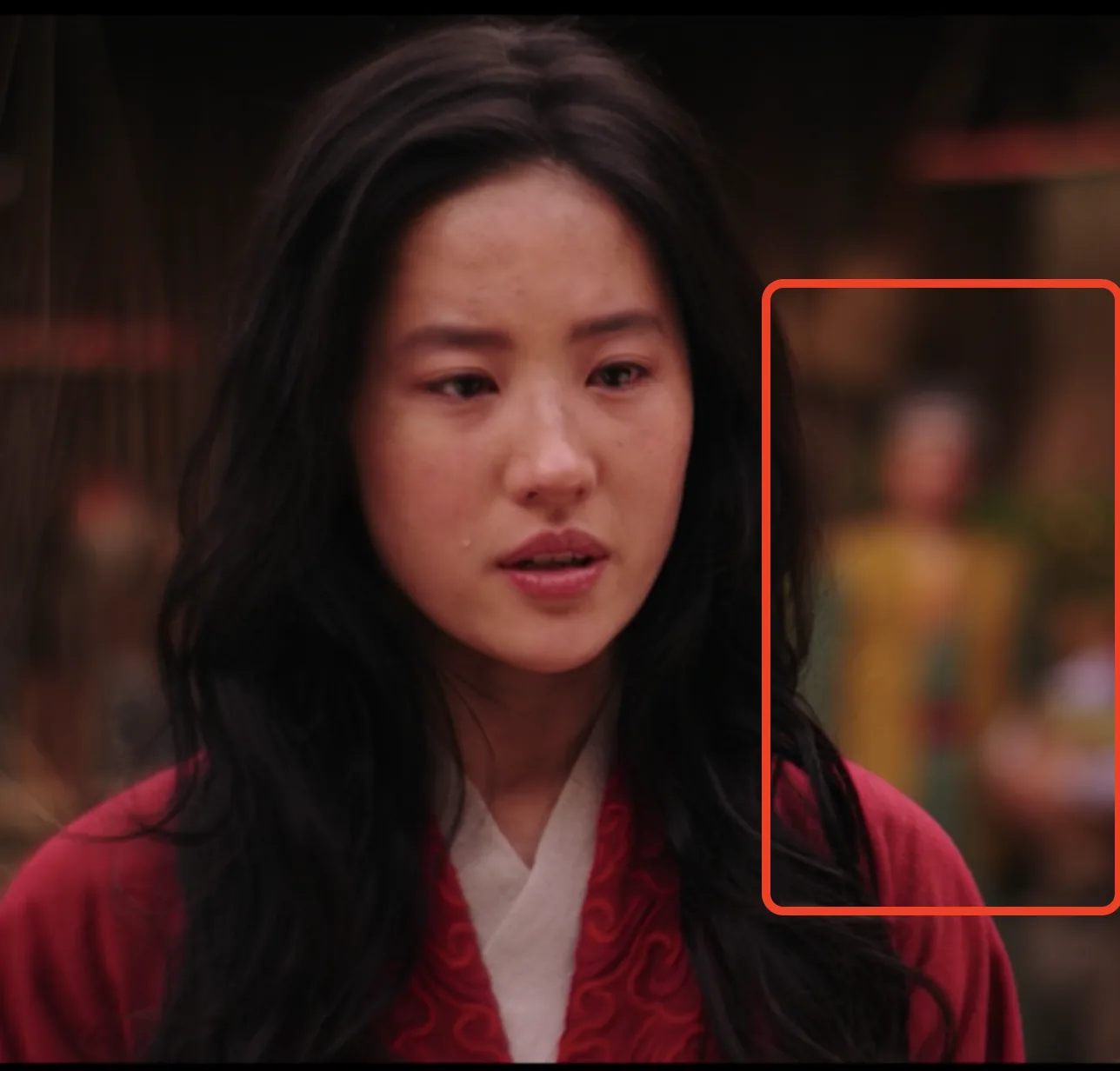
Figure 1. This scene alone took nearly 10 takes. Crying on demand is no joke.
Donnie Yen only shot one scene with us extras. I was 2-3 meters from him. He looks older in person than on screen. During breaks, he’d pluck straw and chew it. He didn’t greet us, we couldn’t talk to him. One impression: his first line reading was in perfect Mandarin with correct tones. The director corrected him: “For consistency, say ‘mu’ in first tone, ‘lan’ in fourth.” He laughed.
Cheng Pei-pei played the matchmaker. She was far away on the roof, barely visible. But there’s a story about the matchmaking scene. The director needed male extras. I eagerly volunteered. Walking toward the tulou, the director said: “You look too old for this.” “But those other guys are so soft-looking — how can they be matches?” “What?” “You’re looking for match making, right?” “Get back…”
Mulan’s father was played by Tzi Ma, an American. He’s the only lead who spoke to me. One rainy day during the chicken-chasing scene, everyone took shelter in the Hua family shrine. Mulan’s dad greeted me. “We’re not allowed to talk to you.” “That’s fine, I’m talking to you. How’s filming?” “Good.” I told him I hadn’t seen Liu Yifei’s work, but I’d seen his sci-fi film Arrival with Hawkeye (I said “Eagle Eye” — he understood anyway). He thought the adaptation wasn’t great, recommended reading the original story Story of Your Life by a Chinese-American sci-fi writer, a Hugo Award winner. A nearby guy (seemed Maori, couldn’t speak Chinese) said he downloaded Arrival from BitTorrent. Tzi Ma joked: “You owe me money then. Buy me dinner.”
The ADs we dealt with most were Matt and Guy — one tall, one short. Matt was from Wellington, visiting Auckland for work. I talked a lot with Guy. He had a young child and loved the flexible schedule — months of intense filming, then nothing for a while. Each production brought new people. He was very funny. “You look like you’re queuing for a bus. China didn’t have buses back then, did it?” When I was pushed to the front: “Your moment to shine. Act well.”
My dedicated makeup artist was Cario. “Dedicated” because wigs take so long that one person handling the same people is more efficient. Her parents were Canadians who moved to NZ; she was born in Wellington, lives in Auckland. Her real job: artist, selling her own paintings. “Do you sell online?” “No, I prefer traditional small exhibitions. Sometimes I set up booths at events. On weekends, I teach kids’ art classes.” As for makeup, she learned on the job. The Mulan crew needed so many makeup artists, and not everyone wants to wake up at 3 AM. She knew a lot about China — Yu Garden, the Bund, xiaolongbao — though she’d never been. She recommended an Asian restaurant near me. But Asian restaurants that Kiwis like are usually not my thing, so I never went.
The Stories
Like I said, filming is mostly waiting. Adults without phones would chat. What did the kid extras do? One day, Matt came to gather us and found the kids all facing the wall in costume. “What’s happening? Are they being punished?” Closer look: they were doing math worksheets in a row. Matt was speechless: “Now I know why I was always beaten by Chinese classmates. If I’d known this is how you study, I wouldn’t be in this mess…”
The extra group was full of interesting people. Some older folks didn’t speak English well, leading to funny situations. Not discriminatory — I fully understand. In their era, schools taught Russian. And all non-native speakers make mistakes — like my “match maker” blunder.
One grandfather must not have understood the director’s briefing but didn’t ask. During Mulan’s victorious return, he kept a grim face. After the shoot, someone asked why he looked so serious. “Mulan is leaving her parents for war. As a fellow villager, of course I’m grim.” They had to tell him: “This isn’t her leaving. She’s returning victorious.” He slapped his forehead. “Oh no. Wrong expression. Director, I didn’t mean to…”
Same guy didn’t recognize Donnie Yen. During a break, he walked up to Donnie: “Excuse me, are you Mr. Fang from East Auckland?” Donnie laughed. “No.” Someone pulled him away: “You can’t talk to the stars!” He was confused: “A star? Isn’t this the guy I did Crouching Tiger, Hidden Dragon 2 with years ago? Lives in East Auckland. Thought I wouldn’t recognize him in costume?”
Rules about phones were clearly stated but relied on self-enforcement — they couldn’t strip-search everyone. Some people got caught and ejected. Every day, we checked in with security — big Maori guys. By week 3, I noticed they kept looking at something inside their booth. Three color photos, A4 size, with “Red Card” written on them. Turns out, one person approached Donnie Yen for an autograph, two others snuck phones in for photos. I remembered on day one, after the first scene, someone was already removing makeup. “I’m done. Going home.” He didn’t tell us why. Follow the rules.
One touching story. Period pieces don’t allow glasses. As a glasses-wearer without contacts, this was painful. The costume team stapled a plastic bag inside my costume’s chest — I could store glasses there between takes. For days, it worked. Then during the chicken-chasing scene, everyone had to look up at Mulan on the roof. The glasses bulge was visible. “Might show. We’ll hold them for you.” The costume person forgot and took my glasses away with the capes. After the shoot, I realized my glasses were gone. I told the AD. He grabbed his walkie-talkie: “Everyone, help find this man’s glasses!” Then he had a helper escort me to the makeup room so I wouldn’t trip. “If they don’t turn up, I’ll pay for new ones.” They eventually found them under a pile of capes. The crew truly cared about us amateur extras.
Now the 2020 fruit picker post - this is a very long one. Let me write it.